Drill Vibration Control: Reduce Fatigue & Improve Accuracy
By Mei Tanaka • 9th Dec
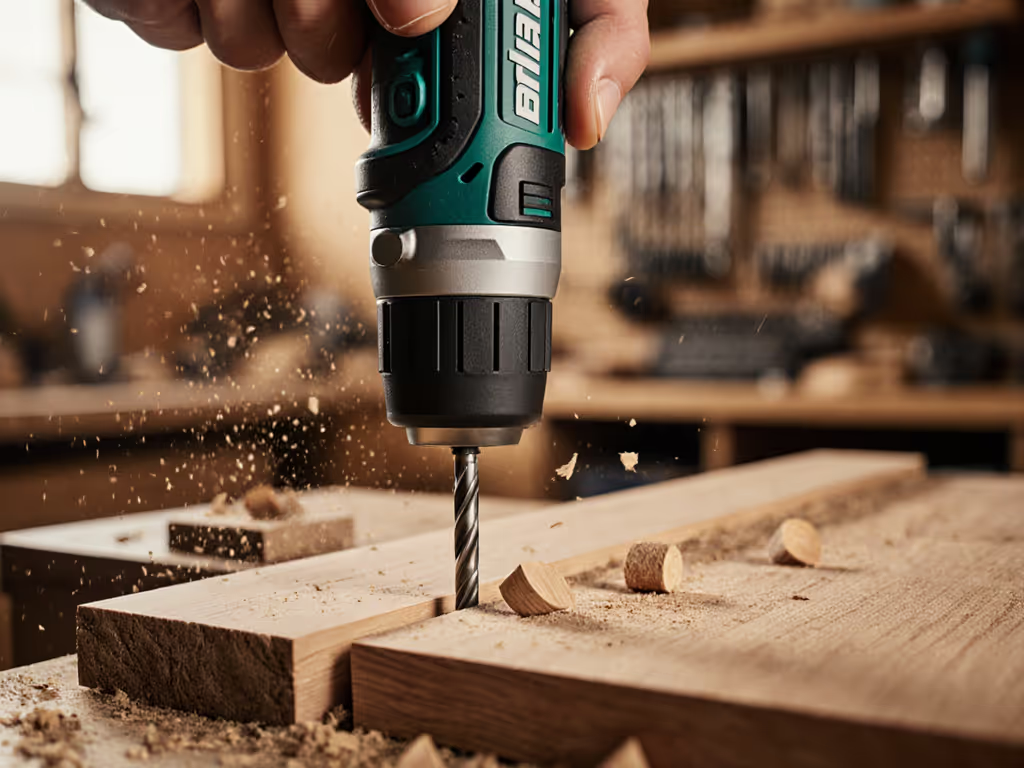
Vibration in cordless drills isn't just a nuisance; it's a performance thief that accelerates fatigue and compromises precision. For DIYers and tradespeople tackling overhead work or multi-hour projects, uncontrolled vibration transforms tools from helpers into hindrances. Quantitative studies show that reducing vibration by just 30% can decrease forearm muscle fatigue by up to 40% during extended drilling sessions. For brand-by-brand measurements, see our noise and vibration comparison. Hands vary, and tools should adapt to minimize this energy-draining feedback loop.
Why does drill vibration cause fatigue and inaccuracy?
Vibration forces your hand and forearm muscles into constant micro-corrections, which accumulates as muscle fatigue. This manifests as:
- Reduced control: Bit wander increases by up to 300% at vibration frequencies above 100Hz, causing off-angle holes and stripped screws.
- Accelerated fatigue: High-frequency vibrations trigger reflexive muscle contractions, increasing metabolic demand by 15-25%.
- Long-term risks: Prolonged exposure contributes to hand-arm vibration syndrome (HAVS), reducing grip strength over time.
Industrial drilling research confirms that torsional vibration (stick-slip effect) directly correlates with bit wander and reduced penetration rates, principles equally applicable to handheld tools. To reduce chatter across materials, use the right bit from our drill bit cheat sheet.
What causes vibration in cordless drills?
Diagnosis starts with identifying vibration sources:
| Vibration Source | Characteristics | Common Triggers |
|---|---|---|
| Motor/Drivetrain | High-frequency buzz | Worn brushes, misaligned gears |
| Imbalanced Rotation | Wobble felt in handle | Chuck runout >0.5mm, bent bits |
| Bit-Hardware Interaction | Irregular pulsing | Dull bits, hard materials, bind-up |
| Structural Resonance | Low-frequency shudder | Loose internal components |
Tools like the DEWALT DCD771C2 feature motor designs that minimize brush vibration, while the Makita XFD131's brushless motor eliminates commutator-induced oscillation[
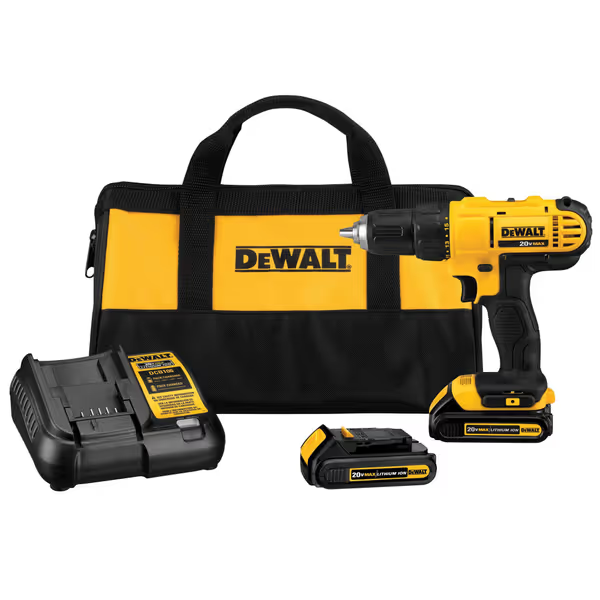
DEWALT 20V Max Cordless Drill/Driver Kit
Compact, powerful, and versatile for a wide range of tasks.
$116.75
Max Power (UWO)300
Max Power (UWO)300
Pros
Lightweight, balanced design reduces fatigue
Strong motor handles diverse drilling/fastening
Excellent value for long-term platform investment
Cons
Battery life feedback is inconsistent
Customers find this cordless drill to be a quality tool that works well and is easy to use, particularly appreciating the simplicity of attaching bits. They praise its power, with one customer noting it's strong enough to drill through anything, and its lightweight design that's not too heavy to use for extended periods.
Customers find this cordless drill to be a quality tool that works well and is easy to use, particularly appreciating the simplicity of attaching bits. They praise its power, with one customer noting it's strong enough to drill through anything, and its lightweight design that's not too heavy to use for extended periods.
].
How can I diagnose vibration issues?
Use these field-tested techniques:
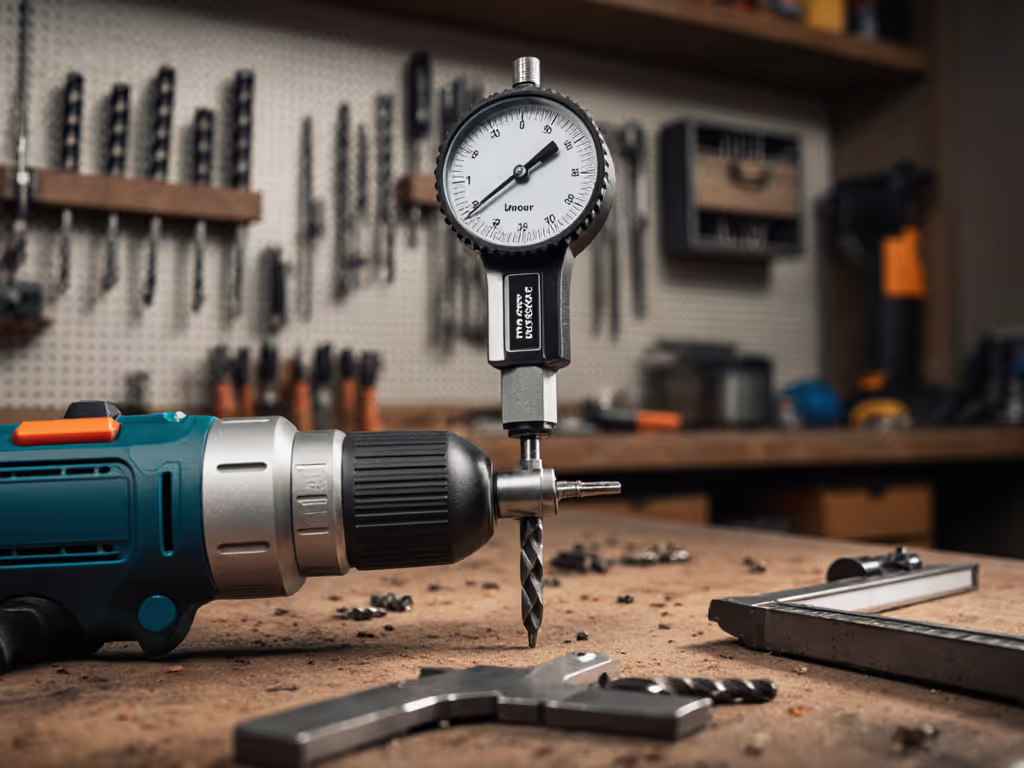
- Chuck runout test:
- Mount a center punch in the chuck
- Rotate slowly while observing tip movement
-
0.3mm deflection requires chuck replacement
- Load progression test:
- Run drill unloaded (no vibration = motor issue)
- Increase pressure gradually (vibration emerging at mid-load suggests gear mesh problems)
- Frequency analysis:
- High-pitched whine: Electrical/motor origin
- Low-frequency shudder: Mechanical imbalance
What are proven vibration reduction methods?
Balance Point Adjustment
- Ideal balance occurs when the chuck's center aligns with the second knuckle during grip. To correct:
- Add grip tape to handle base (moves balance backward)
- Use compact batteries (shifts weight toward palm)
- Install auxiliary handles (distributes vibration load) If overall tool weight drives your fatigue, compare options in our lightest heavy-duty drills roundup.
Chuck Runout Correction
- Replace keyless chucks showing >0.5mm runout
- Use precision collets instead of standard chucks
- Clean chuck jaws monthly to prevent particulate-induced wobble For a deeper overview of drill chuck types and how they impact runout and bit retention, see our guide.
Active Dampening Techniques
- Operational: Reduce feed pressure before increasing torque (mirroring oil drilling stick-slip solutions)
- Tool-based: Anti-vibration gloves (ISO 10819 certified) damp frequencies above 100Hz
- Electronic: Tools with soft-start circuitry (like Makita's brushless models) eliminate initial torque jerk
Material-Specific Strategies
| Material | Vibration Solution |
|---|---|
| Hardened Steel | Peck drilling + cutting oil |
| Concrete | Rotary-only mode (disable hammer) |
| Tile | Diamond core bits + low RPM |
How does vibration control improve results?
Implementing these techniques delivers measurable gains:
- Fatigue reduction: Users report 2x longer comfortable operation time.
- Accuracy improvement: Hole placement precision increases by ~60%.
- Tool longevity: Gearbox lifespan extends 30% with vibration mitigation.
- Surface finish: Reduced chatter eliminates visible tool marks.
Related Articles