School Workshop Drills: Building Safe and Scalable Tool Ecosystems
By Katarina Novak • 28th Oct
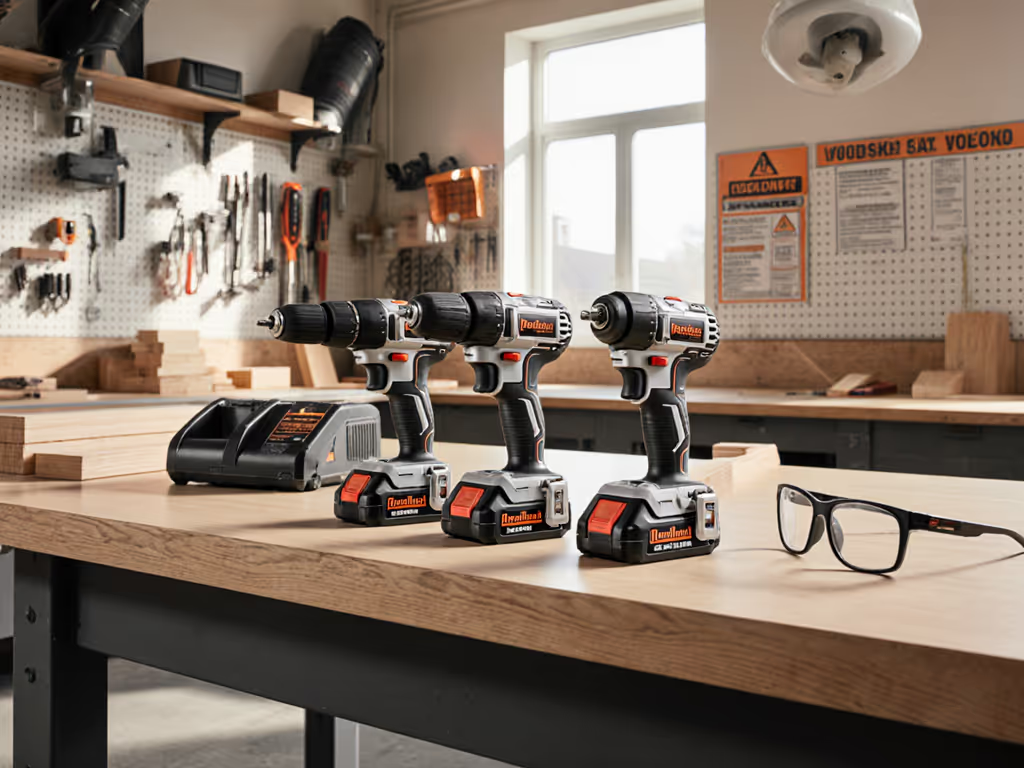
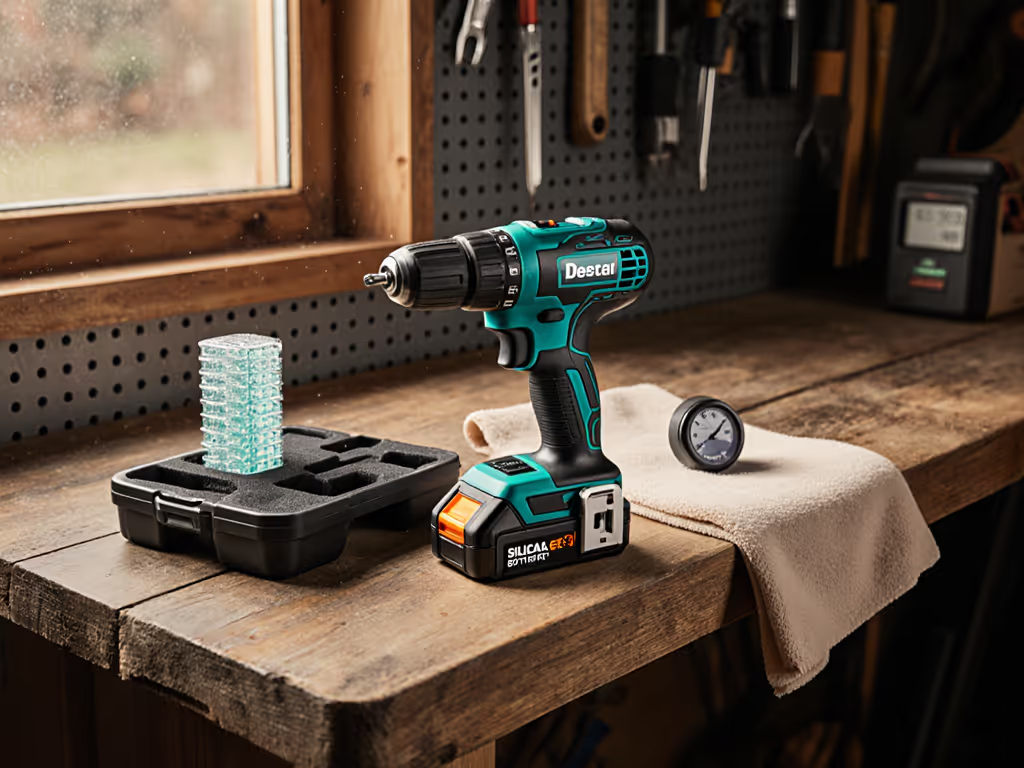
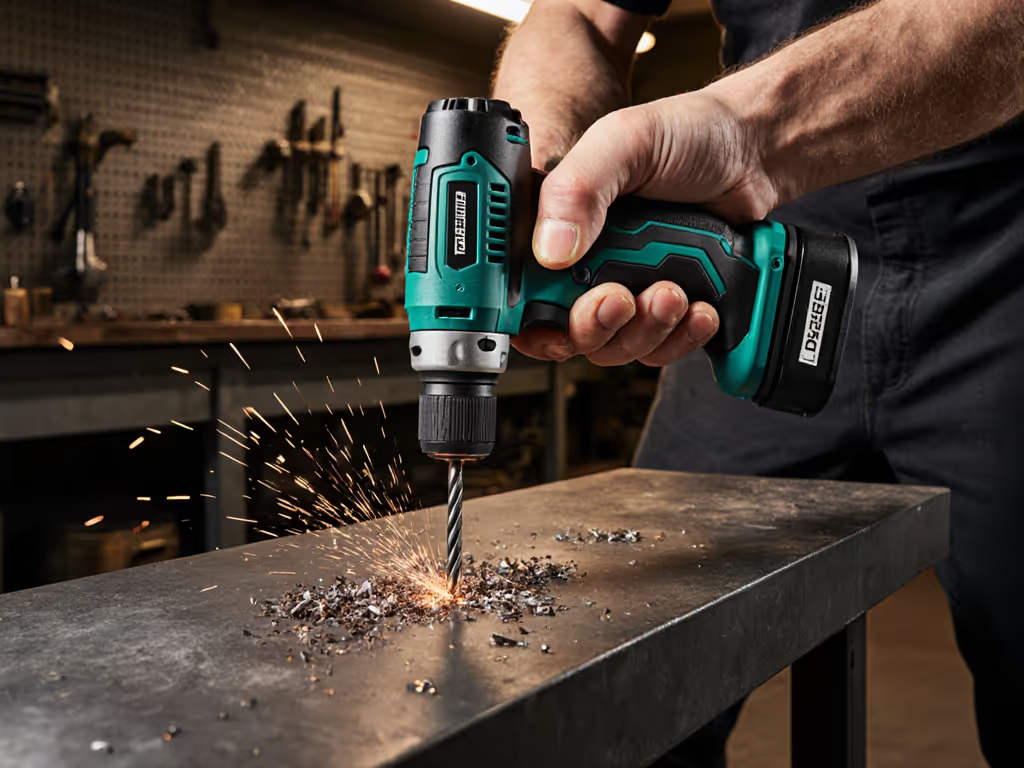
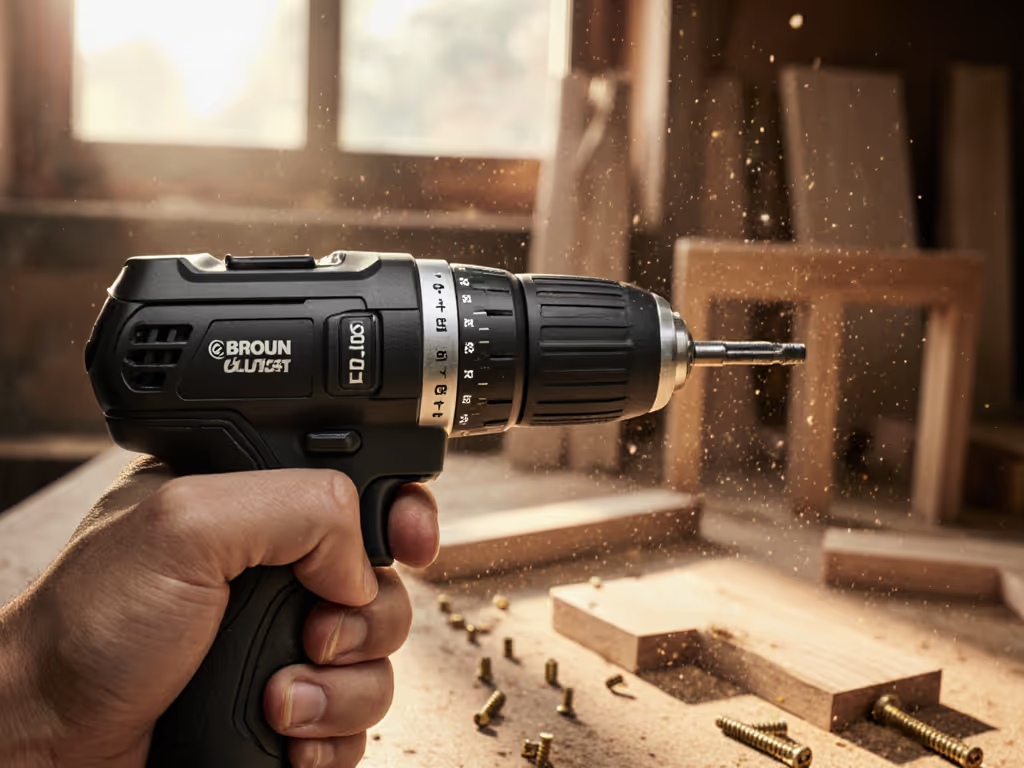
When schools invest in educational power tools, they're not just buying drills, they're building ecosystems that must survive student turnover, tight budgets, and constant use. Too many administrators fixate on peak torque or flashy specs while ignoring the school workshop drills that actually keep running when the bell rings. After a decade standardizing tool fleets across construction sites (and surviving that midnight mall flood where cross-compatible batteries saved our project), I know: uptime wins bids; interchangeable packs keep crews drilling. For schools, that uptime translates to engaged students, fewer lesson interruptions, and sustainable budgets. Let's cut through the noise with a pragmatic framework for tool ecosystems that scale safely.
Why Standardization Beats Peak Specs in Educational Settings
Educators often ask, "Should we buy the most powerful drill for STEM projects?" My answer: No. A 20V drill with "pro-level" torque means nothing if batteries die mid-lesson or a dropped unit strands 20 students. In school workshops, duty cycle matters more than peak output. Drilling pilot holes for cabinetry or assembling robotics frames rarely demands 500+ in-lbs of torque, it demands consistent performance across 30+ daily uses. I've seen schools waste thousands on high-torque kits because they didn't consider battery rotation or multi-voltage charger compatibility. When a student's drill dies, the entire class stalls. That's why I prioritize platforms where a single charger services drills, saws, and sanders (like RYOBI's 18V ONE+ system). Compare battery platform compatibility across major brands to see which ecosystems scale best in a school setting. Their tool-only drill drivers (e.g., PCL206B) let schools expand sustainably without battery bloat.

RYOBI ONE+ 18V Cordless Drill/Driver
Versatile 18V drill for home projects within the expansive ONE+ ecosystem.
$50.12
Max Torque515 in./lbs.
Max Torque515 in./lbs.
Pros
Powerful for household and DIY tasks.
Integrated into 280+ tool ONE+ battery system.
Lightweight, easy to handle, good value.
Cons
Battery/charger sold separately.
Customers find this cordless drill to be of good quality, with plenty of torque for most household jobs, and one customer notes it's powerful enough for DIY projects. The tool is lightweight, easy to use, and comes with batteries that work well with it. They appreciate its value for money and consider it a good choice for home use.
Customers find this cordless drill to be of good quality, with plenty of torque for most household jobs, and one customer notes it's powerful enough for DIY projects. The tool is lightweight, easy to use, and comes with batteries that work well with it. They appreciate its value for money and consider it a good choice for home use.
Serviceability is a feature. A drill that's easy to repair or rotate batteries on delivers more instructional hours than a "top-spec" unit gathering dust in a closet.
Selecting Student-Friendly Drills: Safety, Not Just Specs
Q: How do we balance safety with functionality for teens?
Schools fixate on PPE compliance (rightly so!), but classroom safety protocols start before the tool leaves the cabinet. Share this drill safety checklist with students to reinforce PPE and safe operation basics. Look for:
- Weight distribution under load: A drill tipping when overhead drilling causes falls. Lightweight 12V platforms (like BLACK+DECKER's 20V MAX compact line) prevent fatigue during prolonged use. That BCD702C1 kit's 3.25 lbs. with battery is ideal for younger students (no wrist strain when drilling into 2x4s).
- Chuck runout under 0.5mm: Critical for clean holes in cabinetry projects. Test-run samples; vibration from poor runout causes loss of control.
- E-clutch engagement points: A 24-position clutch (like RYOBI's) prevents stripped screws during delicate joinery. 11-position clutches? Fine for hanging pictures, but not for precision STEM builds.
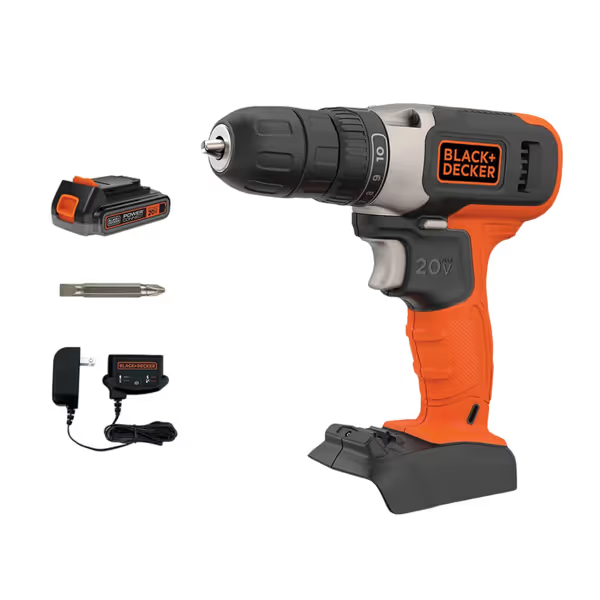
BLACK+DECKER 20V MAX Cordless Drill Kit (BCD702C1)
Reliable 20V drill for household tasks and basic projects.
$69.99
Battery Voltage20V MAX* Lithium Ion
Battery Voltage20V MAX* Lithium Ion
Pros
Lightweight, balanced design reduces fatigue.
11-position clutch prevents stripped screws.
Excellent value for everyday home projects.
Cons
Durability can be inconsistent for heavy use.
Customers find this cordless drill to be a great little workhorse that works well for projects around the house, particularly for basic household needs. They appreciate its lightweight design, good battery life, and power, with one customer noting it performs as well as more expensive models.
Customers find this cordless drill to be a great little workhorse that works well for projects around the house, particularly for basic household needs. They appreciate its lightweight design, good battery life, and power, with one customer noting it performs as well as more expensive models.
Remember: Safety isn't just guards and glasses. It's drills that don't kick back during first-time use, with predictable trigger control. I've seen students panic when a drill suddenly jerks, often because the tool lacked thermal throttling during sustained load. That's downtime and a safety risk.
Building Scalable Ecosystems: The STEM Tool Integration Playbook
Q: How do we future-proof our workshop without overspending?
Start with STEM tool integration baked into your tool selection. Schools often buy drills in isolation, then scramble when adding 3D printers or CNC routers. Instead:
- Map your duty cycles: Track which tasks eat battery life fastest (e.g., driving 3" screws into SPF lumber vs. drilling 1/4" holes in plywood). Data shows 12V drills suffice for 80% of student projects, reserving 18V+ for metal lathes or concrete anchors. If you're deciding between platforms, see our 12V vs 18V comparison for cost, weight, and runtime trade-offs.
- Standardize on one battery platform: Mixing brands guarantees dead tools and frustrated students. RYOBI's 280+ compatible tools let shops add a nailer for framing projects without new chargers. That's $150+ saved per class.
- Audit service network access: Can your district's tech department replace worn chucks in-house? Or will drills sit idle for weeks waiting for mail-in repairs? I track service turnaround like payroll, because every hour a drill's down costs instructional time.
Q: What's the bare-minimum starter kit?
- 2 drills (one per 10 students)
- 4 batteries (2 per drill, rotated)
- 1 multi-voltage charger (e.g., 12V/18V)
- Bit sets color-coded by task (e.g., blue=metal, red=wood)
This avoids the "battery bottleneck" that halts projects. My crew's midnight flood fix used six packs leapfrogged across two chargers, schools need that same resilience.
Maker Space Equipment: Where Uptime Meets Education
Q: How do we maintain maker space equipment without dedicated staff?
Schools underestimate how much downtime stems from poor maintenance. Use our cordless drill maintenance guide to set up checklists and schedules that students can follow. Implement these before Day One:
- Daily battery health checks: Students log runtime per session. Drops >15% trigger replacement before failures.
- Tool "safety cops": Rotate students to inspect cords, chuck tightness, and LED functionality pre-class (inspired by OSHA's student safety protocols).
- Charger queue management: A single 30-min rapid charger serving 20 drills fails. Budget for one charger per 4 tools minimum.
Most importantly: ban specialty tools for core fleets. No cordless shears or oscillating tools unless they share batteries with your main platform. That RYOBI drill? It pairs with their jigsaw and sander (no duplicate chargers cluttering the shop).
The Verdict: Scalable Systems Over Spec Sheets
Schools don't need the "strongest" drills, they need educational power tools that log 10,000+ student hours without collapsing the budget. My standard? If a drill can't run anchors off six packs leapfrogged across two chargers during a midnight crisis, it won't survive a semester of freshman woodworking. Prioritize:
- Cross-compatible platforms (12V/18V sharing batteries)
- Service networks with <72-hour turnaround
- Duty-cycle-appropriate specs (e.g., 300 in-lbs for cabinetry, not 600)
- Student-friendly ergonomics (weight <3.5 lbs., grip diameter <3.2")
When I evaluate school workshops, I ignore peak torque. I check battery health logs, charger ratios, and how many tools share a single service part number. Uptime wins bids; interchangeable packs keep crews drilling (whether you're building a mall or a maker space). Start small, standardize ruthlessly, and let your ecosystem grow with your students' skills. That's how you turn tool purchases into lasting educational value.
Related Articles