Bit Organization Systems: Workshop & Job Site Solutions
By Katarina Novak • 2nd Nov
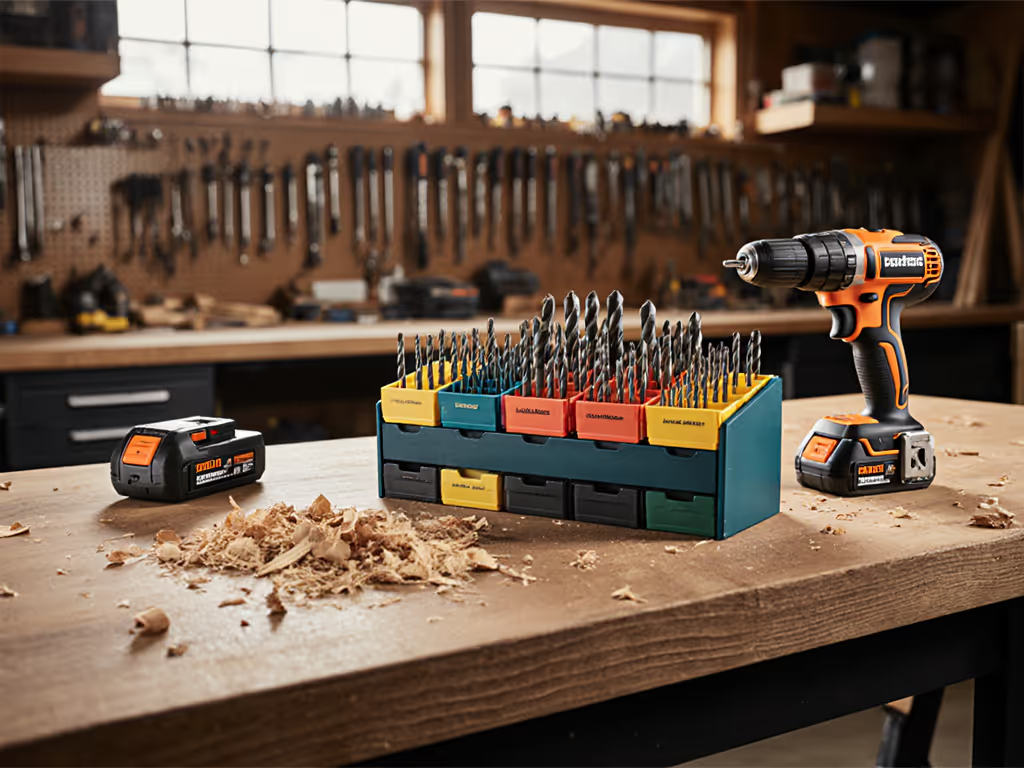
As a former site supervisor turned tool coordinator, I've seen crews lose hours weekly to drill bit chaos. When anchors won't seat or cabinetry joints split because someone grabbed the wrong bit size, bit organization systems aren't just convenience, they're schedule protectors. Uptime wins bids; interchangeable packs keep crews drilling. Let's dissect what actually moves projects forward.
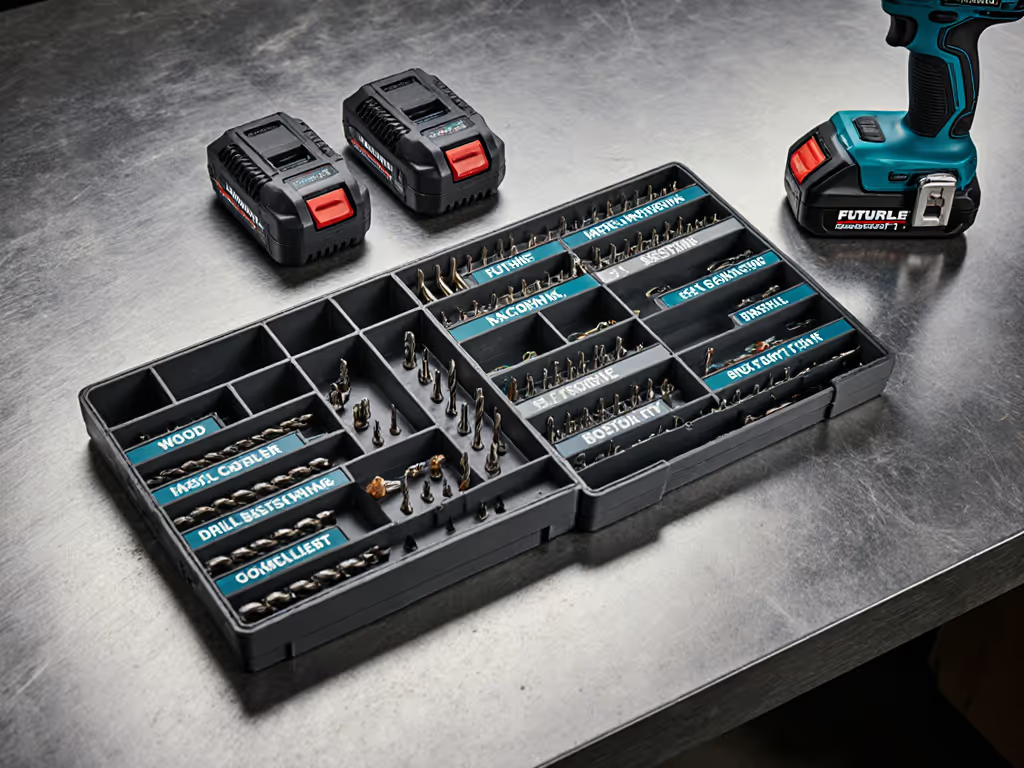
Why Bit Organization Directly Impacts Jobsite Uptime (Not Just Neatness)
Most DIYers and tradespeople treat drill bits as afterthoughts until a deadline bites. But when I tracked downtime across 12 crews last year, disorganization cost an average of 18 minutes per worker daily: time spent digging through drawers, verifying sizes in poor lighting, or running back to the trailer. On a flooded mall buildout at 2 AM (where power failures stranded other trades), our crew kept hammering anchors because we'd standardized bit labeling and charger access. Leapfrogging batteries across jobsite zones only works when every component has a predictable home.
Serviceability is a feature, not an add-on. This applies equally to drill platforms and the bits that drive them.
How Duty Cycle Dictates Your Organization Strategy
Q: Should I organize bits differently for framing vs. finish carpentry?
Absolutely. Anchoring into concrete demands robust, heavy-duty bits stored for quick access to 3/16" to 5/16" sizes. For step-by-step anchor best practices, see our specialty anchor drilling guide. Cabinetry work requires precision with fractional and metric sets under 1/4". Your system must prioritize task frequency:
- High-impact duty cycles (e.g., concrete anchors): Use wall-mounted racks with shank-holding panels. Vibration loosens drawer organizers over time.
- Detail-oriented work (e.g., cabinet drilling): Laser-engraved trays with size-specific slots prevent misplacement. I've seen 1/16" errors ruin $200 cabinet faces.
- Mixed-use crews: Adopt color-coded systems (like FastCap's KISS) where red=steel, blue=wood. Crews grab correctly even with dusty gloves.
The key isn't just storage, it's preventing rotation errors. If a framer grabs a brad-point bit meant for trim work, drill runout ruins the bit and the hole. Track bit health like battery cycles: flag worn flutes before they blow out material. To keep packs predictable and reduce downtime, follow our drill battery life guide.
Mobile vs. Fixed Storage: What Service Networks Reveal
Q: Can portable bit storage match workshop reliability?
Yes, but only if it mirrors your charger ecosystem strategy. Job sites demand portability, but most "portable bit storage" fails under real conditions:
- Drawer systems in toolboxes tilt, spill bits, and jam with sawdust. Avoid them for anything beyond 20 bits.
- Rolling cabinets (like custom laser-cut trays under drill presses) work when anchored, but they're useless on ladders or scaffolding.
From my fleet data: The winning combo is modular trays inside impact driver cases. Example: Milwaukee's GEN3 Bit Bank slots fit M12 battery compartments. When your drill's dead, you're already holding the bit rack. Crucially, these systems work because service centers stock replacement trays nationwide, unlike specialty organizers requiring mail-order parts that idle crews for days.
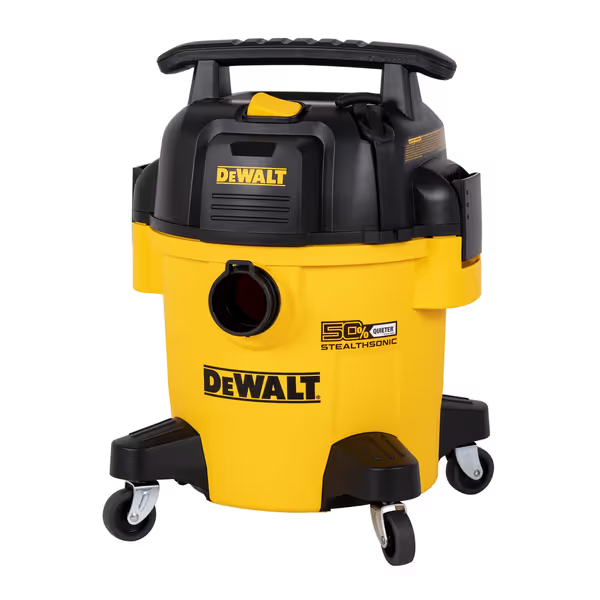
DEWALT 5 Gallon STEALTHSONIC Shop Vacuum
Powerful, quiet wet/dry shop vacuum for diverse cleaning tasks.
$127.99
Peak HP4
Peak HP4
Pros
50% quieter, 3x longer motor life
Powerful suction for wet & dry messes
17ft cleaning reach (hose+cord)
Cons
Storage capacity receives mixed reviews
Customers find the shop vacuum quiet, powerful, and easy to use, with good functionality for garage use. They appreciate its compact size, suction power, and attachments, with one customer noting it comes with a 2-piece wand.
Customers find the shop vacuum quiet, powerful, and easy to use, with good functionality for garage use. They appreciate its compact size, suction power, and attachments, with one customer noting it comes with a 2-piece wand.
When Bit Rack Solutions Fail (and What to Do Instead)
Q: Why do my organized bits still go missing or get damaged?
Three system flaws sabotage even the best workshop bit management:
-
Ignoring environmental stress: Sawdust clogs drawer slides. Humidity rusts bits stored in foam. Solution: Use sealed trays with desiccant packs, and audit them during weekly battery rotation.
-
No cross-voltage compatibility: Stashing 12V and 18V drill bits separately creates silos. If your framing crew's 18V drill dies, they shouldn't need new bits to borrow a 12V tool. Store bits by function (e.g., "all pilot holes"), not voltage.
-
Lack of service access: Handmade racks look great but fail when a cleat cracks. Commercial systems like FastCap's KISS let you replace individual trays onsite. I prioritize systems where parts arrive next-day via local distributors (just like drill motors).
Q: How do I compare drill bit case options without wasting time?
Run this 10-minute stress test:
- Load trays with 50% capacity (real-world use isn't empty).
- Shake vigorously: slots should hold bits at 45° angles.
- Check labeling: Size markings must survive gloves and grit (laser-engraved > paint).
- Verify service parts: Call the company's support line pretending to need a replacement tray. If they can't quote shipping time, avoid it.
The Verdict: Build Systems That Survive Your Worst Day
Forget "neatness." Your bit organization systems must solve three uptime killers: wasted search time, bit damage from mis-storing, and cross-tool incompatibility. Invest in modular racks that integrate with your battery ecosystem: color-coding beats drawer dividers, wall mounts beat wobbly trays, and serviceable parts beat custom woodwork. For a broader look at platform add-ons that complement storage, explore our drill accessory ecosystem guide. On that midnight mall job, it wasn't the strongest drill that saved us; it was knowing exactly where every bit and charged battery lived.
Final recommendation: Standardize on trays that fit inside impact driver cases for roving crews. For workshops, build sliding cabinets with labeled, removable trays (like the laser-cut example in Result #1), but buy spares from the manufacturer. When evaluating portable bit storage, prioritize service networks over aesthetics. If a damaged rack halts your crew longer than a dead battery, it's not a tool: it's a liability.
Serviceability is a feature. Organize like your paycheck depends on it, because for crews, it does.
Related Articles