Multi-Family Drill: Crew Battery Sharing Solutions
By Diego Castillo • 23rd Oct
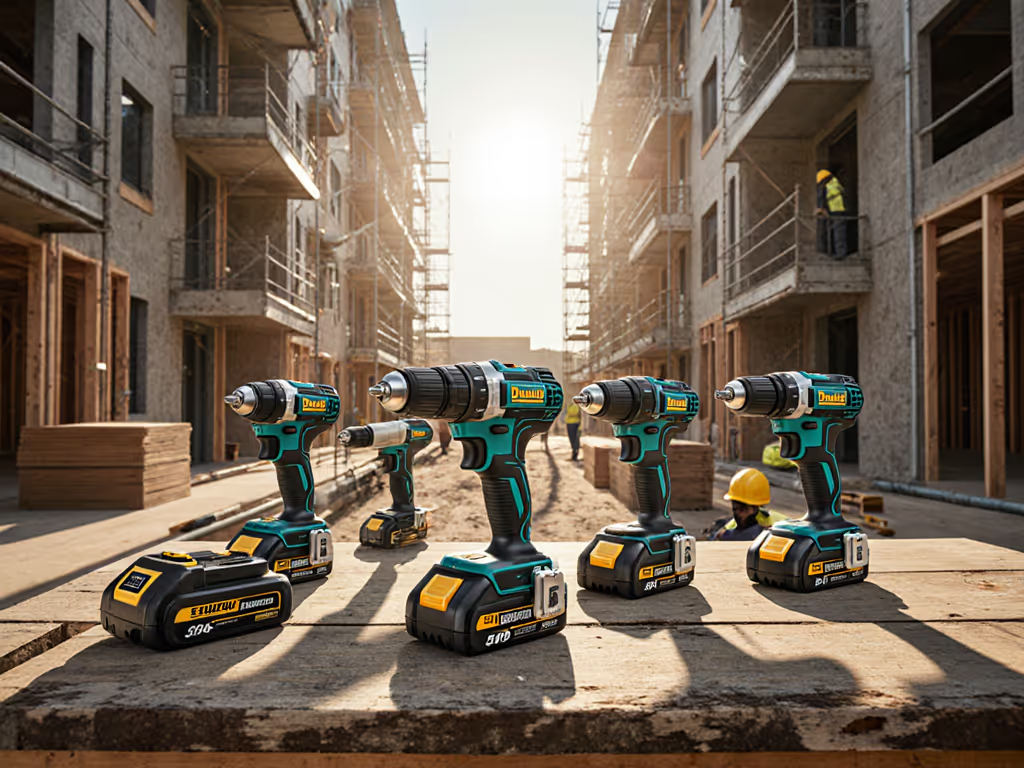
When your crew tackles multi-family construction drill tasks across apartment building phases (from framing partition walls to installing cabinets in identical units), battery bloat isn't just annoying. It's workflow kryptonite. For apartment building power tools, nothing derails progress like hunting for chargers while drywall screws wait. I've seen crews waste 20% of their day swapping mismatched batteries. The fix? A shared ecosystem that turns chaos into compound confidence. Let's build yours step by step.
Why Crew Battery Sharing Systems Are Non-Negotiable (Even for Small Teams)
In multi-story construction, downtime multiplies fast. Imagine three people drilling pilot holes through identical studs in a 10-unit block. If everyone uses different battery platforms, you're juggling chargers, batteries lose charge in pockets, and morale tanks. True crew battery sharing systems solve this by letting all tools (drills, impact drivers, even specialty gear) run on one battery type.
Confidence comes from repeatable results, not redundant gear.
Key distinction: Don't confuse voltage with compatibility. An 18V platform (like Bosch's AMPShare™) and "20V MAX" systems (marketing speak for the same actual voltage) can't interoperate. For a deeper look at cross-brand compatibility, see our battery platform comparison. But within a single ecosystem, you'll find consistency across tools. AMPShare (Powered by Bosch) is the prime example: Bosch, FEIN, Rothenberger and 12+ brands now share one 18V battery design. CORE18V technology inside these packs delivers cooler operation and longer lifespans than older cells. As of 2024, this alliance offers over 200 compatible tools (rising to 300+ by year-end), all using the same battery footprint.
Safety first: Never force adapters between systems. Thermal runaway risks spike when batteries are modified. Stick to OEM-certified ecosystems.
Step 1: Map Your Crew's Drilling DNA (15 Minutes)
Before touching tools, define exactly what your multi-family construction drill needs to achieve. Most crews skip this and overbuy. Grab a notepad:
- Task inventory: How many holes per unit? (e.g., 120 pilot holes for cabinets × 10 units = 1,200 holes)
- Materials: Mostly wood studs? Concrete anchors? Drywall?
- Drill depth: Standard 1-1/4" pilot holes? Deeper conduit holes?
- Ergo stress points: Overhead work? Tight corners? Ladder use?
My Saturday class aha-moment: A hesitant beginner swapped to a 6" bit and mid-speed clutch setting, then sank her first straight pilot hole. Why? Shorter bits reduce flex in repetitive drywall tasks. Pro tip: For identical apartment units, standardize bit lengths. No more fumbling for the right bit mid-task. Use our drill bit cheat sheet to match bits to materials across identical units.
Checklist: Crew Drilling Profile
- 95% of holes < 2" depth? → Prioritize compact drills (1/2" chuck)
- Heavy masonry work? → Verify hammer drill compatibility in ecosystem
- Overhead drilling > 30 mins/day? → Target sub-3.5 lb tools with rear handles
- 10+ units/month? → Budget for 2x batteries per tool minimum
Step 2: Test-Drive Ecosystems (30 Minutes)
Shared tool ecosystems live or die by battery performance under load. Don't trust Ah ratings alone. Our lithium-ion battery runtime benchmarks show how pack design and cell management affect real-world performance. A 4.0Ah pack with poor cell management can die faster than a smart 2.0Ah. Here's how to pressure-test:
- Runtime reality check: Rent or borrow competing 2.0Ah batteries. Drill 50 identical 1-1/2" holes in SPF studs at clutch setting 10. Track time-to-50%-power-warning. Good sign: Consistent RPMs until 40+ holes. Red flag: Sudden drop-off at 30 holes.
- Swap speed test: Time how fast you can:
- Release battery in gloved hands
- Swap between drill/impact driver
- Confirm full charge on tool LED
- Ergo audit: Hold drills with their batteries attached. Does weight balance near your palm? (Critical for fatigue-free multi-story work.)
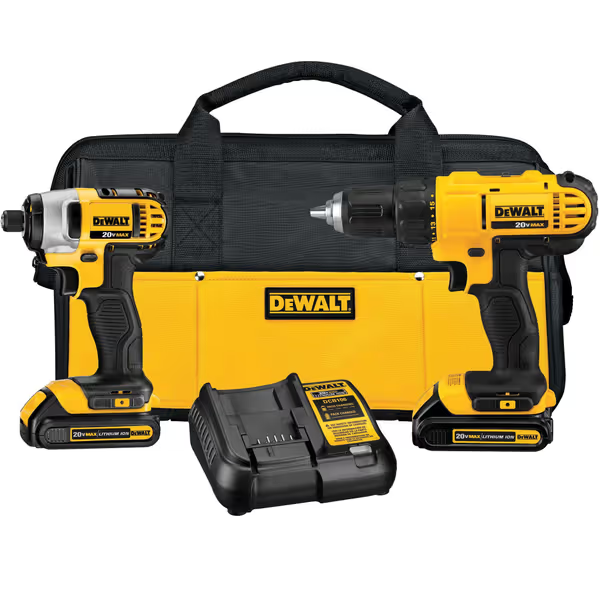
DEWALT 20V MAX Cordless Drill and Impact Driver Combo Kit (DCK240C2)
Versatile 20V combo for home projects with power and convenient ergonomics.
$179
Power Output (UWO)300 UWO (Drill)
Power Output (UWO)300 UWO (Drill)
Pros
Excellent value for home DIY and basement projects.
Compact, lightweight design fits tight spaces.
Good power and weight distribution for control.
Cons
Mixed reviews on battery life and long-term durability.
Customers find the power tool set to be of good quality and excellent value, particularly for basement projects. The tools work well, with one customer noting it's very functional for home projects, and they appreciate its unbelievable power and good weight distribution.
Customers find the power tool set to be of good quality and excellent value, particularly for basement projects. The tools work well, with one customer noting it's very functional for home projects, and they appreciate its unbelievable power and good weight distribution.
The DEWALT 20V MAX combo kit (DCK240C2) shines here for crews starting out. Its compact drill (DCD771) weighs 3.4 lbs with battery — light enough for overhead work in apartment ceilings. The clutch clicks crisply at low settings (no more stripped drywall screws), and those 1.3Ah batteries swap in 2 seconds. Real-world note: At 300 UWO, it handles 2-1/2" screws in SPF all day, but for concrete anchors, you'd pair it later with a dedicated hammer drill (in the same ecosystem).
Avoid this trap: Don't buy "pro" kits with 3 batteries upfront. You'll rarely use all simultaneously. Start with two batteries and one smart charger (like DEWALT's DCB115).
Step 3: Build Your Starter Stack (Action Plan)
For apartment building power tools, your Phase 1 kit should cover 80% of drilling tasks today while leaving room to grow. Based on crew size:
| Crew Size | Drill Type | Batteries | Key Add-Ons |
|---|---|---|---|
| 1-2 | Compact drill (1/2" chuck) | 2x 2.0Ah | Low-speed clutch bit set |
| 3-4 | Compact + hammer drill | 4x 2.0Ah | Multi-voltage smart charger |
| 5+ | Compact drill fleet | 6x 4.0Ah | Central charging station |
Why this works: In a 6-unit renovation I guided, a 3-person crew used Bosch AMPShare batteries across drills, impact drivers, and FEIN oscillating tools. One 4.0Ah pack per person handled 8 hours of drywall work — no battery swaps. The secret? AMPShare's COOLPACK 2.0 tech prevents thermal throttling during back-to-back drywall runs.
Your 30-Day Starter Timeline
- Day 1: Buy 1 drill + 2 batteries (prioritize tool-only if you have older compatible batteries)
- Day 7: Add impact driver (same platform)
- Day 15: Test drill on actual apartment studs; track battery depletion
- Day 30: Buy second charger only if you hit 90% runtime on both batteries during marathon sessions
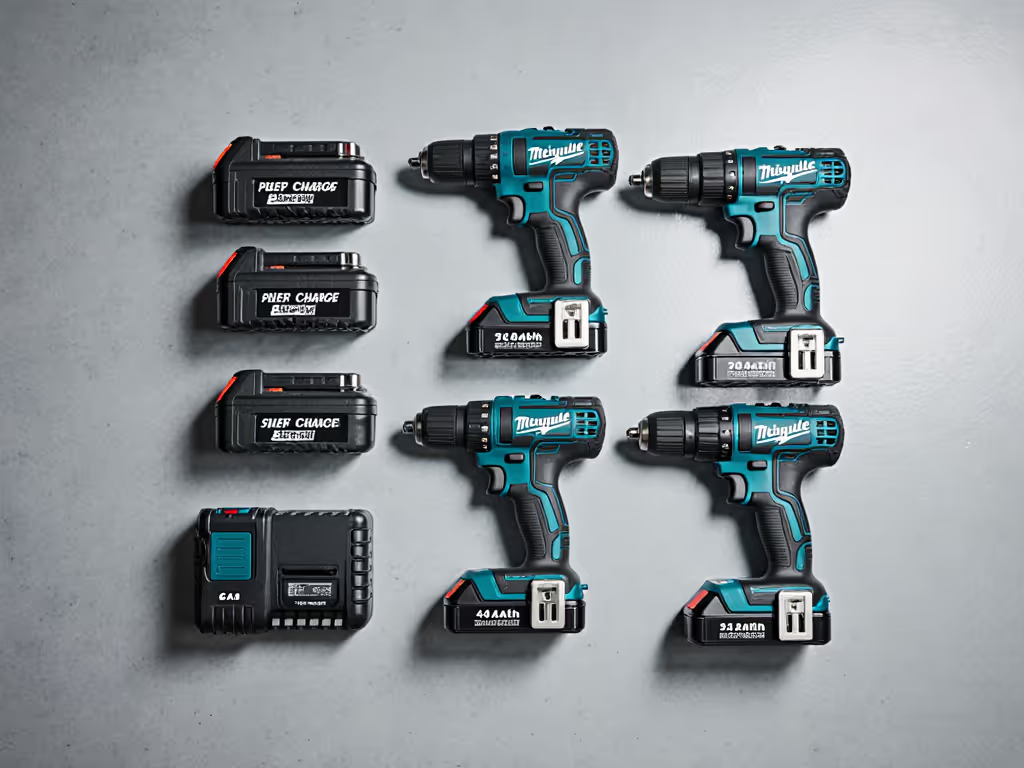
Step 4: Optimize the Crew Workflow (Ongoing)
High-volume drilling tools demand habits, not just hardware. Implement these before your next multi-family job:
-
Battery triage system: Label batteries by charge level:
- 🔴 Red = <30% (use for touch-ups only)
- 🟡 Yellow = 30-70% (primary work batteries)
- 🟢 Green = 70-100% (reserved for critical tasks)
-
Charging rhythm: Rotate batteries every 25 minutes during long sessions. Why? Lithium-ion cells degrade faster when held at 100% or drained to 0%.
-
Bit discipline: Pre-load 3 standard bits per drill (e.g., 1/8" pilot, #2 square drive, 1/4" Torx). Reduces task-switching time by 40%.
Critical safety reminder: Never leave batteries in direct sun on apartment balconies. Heat above 104°F (40°C) permanently cuts capacity. Store in shaded tool carts.
Step 5: Expand Without Ecosystem Lock-In
Your shared tool ecosystem must grow with you. Avoid these expansion sins: If you're tempted by a smaller form factor, read our 12V vs 18V platform guide before mixing voltages.
- ❌ Adding a random 12V drill for tight spaces (creates new battery burden)
- ❌ Buying "pro" hammer drills outside your platform
- ❌ Ignoring future tool categories (e.g., no oscillating tool plans for pipe cuts)
Smart growth path:
- Verify all new tools use your battery footprint (e.g., AMPShare logos)
- Prioritize tools with dual-voltage capability (like newer Bosch tools that accept legacy packs)
- Invest in a modular charging station early, like the Twin Summit Design solution for up to 11 tools. It centralizes charging, preventing battery scavenger hunts.
Start simple, lock the ecosystem, and let skills compound.
Your Action Plan: From Overwhelmed to Optimized
I'll never forget the Saturday class student who walked in terrified of drills, and left grinning with a two-battery kit after sinking perfect pilot holes. She skipped the "three-battery gimmick" bundle because her first job didn't need it. That's the compound effect in action: Right tool → right confidence → right decisions.
Today's actionable next step:
- Audit your last apartment project's drilling tasks (use Step 1 checklist)
- Test one battery ecosystem's swap speed at your local store this week
- Commit to starting with two batteries, not three, on your next crew kit
Momentum matters. When your drill, impact driver, and future oscillating tool all share batteries, you're not just saving money. You're building a repeatable system where every crew member moves with the same rhythm. And that's how confidence compounds, hole after identical hole.
Related Articles