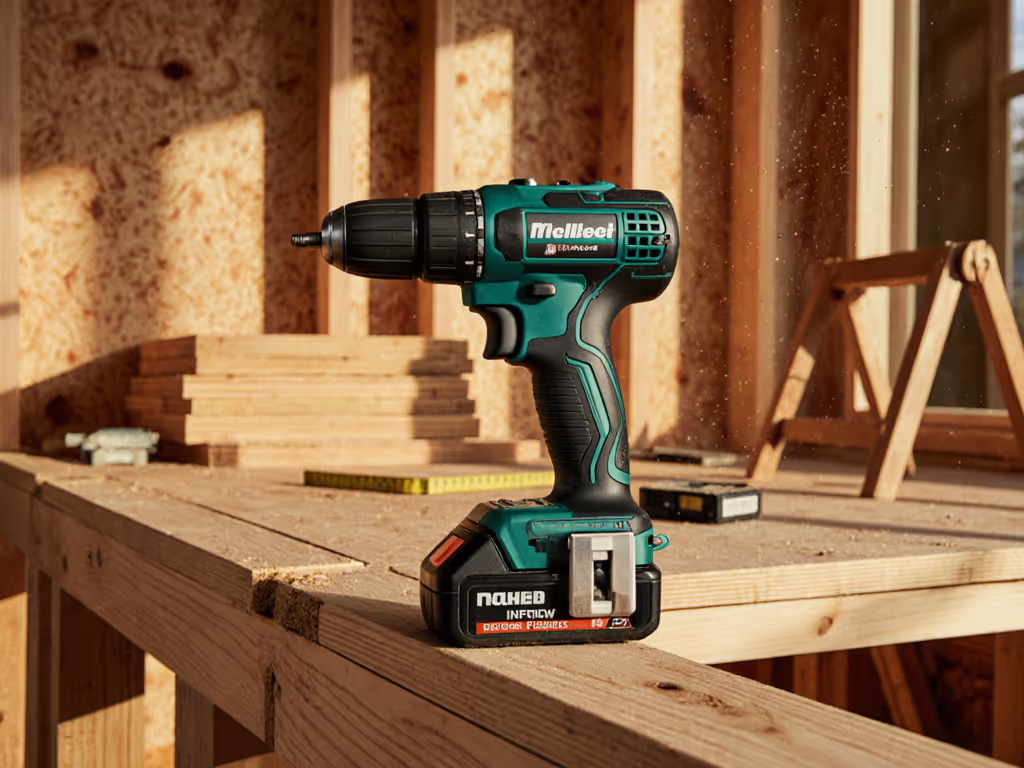
Treehouse Drills: Choose Your Battery Platform
By Priya Nayar • 19th Feb
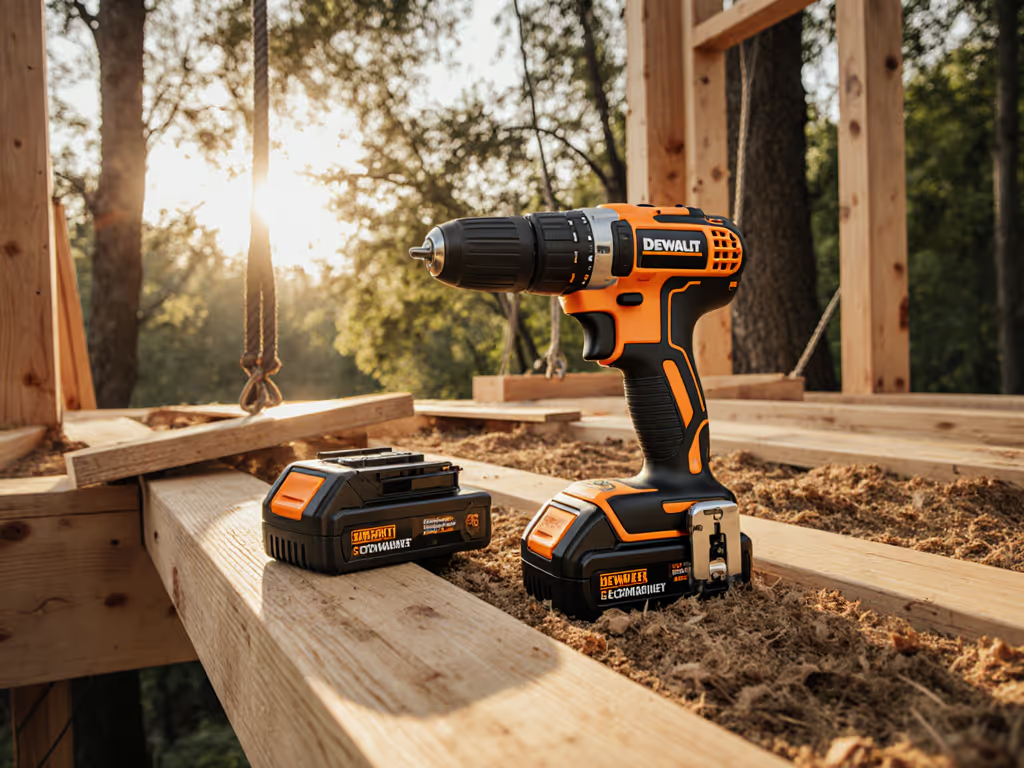
The Hidden Cost of Platform Confusion
You're staring at a backyard treehouse project. The platform design is solid, permits are approved, and you've done the safety homework (checked the tree health, reviewed guardrails, studied attachment methods, and planned for proper load distribution). Then reality hits: which treehouse construction drill do you actually need, and more importantly, which battery platform will save you money and frustration over the next five years?
Most DIY homeowners approach this backward. They hunt for the flashiest drill with the highest torque number, grab a combo kit because it feels like a bargain, and move on. Six months later, they're standing on a ladder with a dead battery, watching a charger blink red, waiting for a 30-minute top-up. Or they've bought two entirely different platforms because they "needed" a specific feature, and now they're managing four batteries, two chargers, and a closet full of duplicate gear.
This isn't about buying a tool. It's about choosing an ecosystem.
Why Platform Thinking Matters for Elevated Work
Treehouse construction and elevated structure power tools create specific demands that most general drills weren't designed for. You're working overhead, often on a ladder or scaffold. Balance matters. Weight matters. One hand is frequently steadying yourself. Battery runtime isn't theoretical; it is the difference between finishing a job and stranding yourself at height waiting for a charge. To maximize runtime and avoid mid-air downtime, see our battery life best practices.
Worse, treehouse work isn't one-off. You start with drilling pilot holes and driving fasteners. Then you need a hammer drill for structural anchors. Soon you're cutting lumber with a circular saw, installing ventilation with a hole saw, and maybe running a nailer for interior framing. Each tool demands its own battery, or does it?
This is where most buyers stumble. They pick a drill based on one project, lock into a battery platform with limited breadth, and face an agonizing choice later: spend another $400 to add a second-ecosystem tool, or stretch to a marginal tool that doesn't quite fit the task.
Buy the platform, not the momentary spec-sheet thrill.
The Real Cost of a Treehouse Build
Let's be concrete. A typical backyard treehouse project (platform construction, railings, access ladder, interior work) spans 40-80 hours of active drilling, driving, and cutting. You're not grinding metal or running commercial masonry work. But you are working overhead, so ergonomics and reliability compound.
If you buy a single-tool combo kit at $200-300, you get a drill, one 2.0Ah battery, and a charger. Sounds reasonable until hour 30 of your project, when that battery is spent and the charger is a slow trickle. You either buy a second battery ($80-120) or sit idle. If the drill's balance is poor or its chuck wobbles, you're fighting fatigue and accuracy on every hole.
Now expand to a realistic scenario: you finish the treehouse and later tackle a deck rebuild, garage shelving, or bathroom remodel. Suddenly you need an impact driver for fastening, a circular saw for framing, and maybe a reciprocating saw for demo. If your original platform has weak support across these tools, or if the batteries underperform in your ecosystem, you're forced into a second (or third) platform.
I learned this the hard way. After buying a flashy combo I used twice, I had to borrow a drill because my lone battery was charging. I resold the kit at a loss and rebuilt around one platform with two packs. Suddenly, every new tool felt cheaper and my projects stopped waiting on chargers. That one decision (choosing a platform, not a tool) saved me hundreds and restored sanity to my shop.
What Matters: Beyond the Marketing Numbers
When evaluating a safety-conscious drilling setup for treehouse work, ignore peak torque. Ignore the biggest number on the box. Instead, focus on what actually affects your work and your wallet:
Ecosystem Breadth How many tools does the platform support? A narrow ecosystem (just drill and impact driver) limits future expansion. A broad one (drills, impacts, hammers, saws, nailers, angle grinders, even outdoor power equipment) means your next tool reuses batteries and chargers. This is platform value. Every new tool becomes incrementally cheaper because you've already bought the power infrastructure.
Effective Battery Size and Cost Per Wh A 2.0Ah battery at 18V delivers roughly 36Wh. At street pricing, if that costs $60, you're paying $1.67 per Wh. A 5.0Ah at the same voltage might cost $120, yielding $0.60 per Wh. For sustained tree-mounted structure work, larger packs are friendlier on your wallet and provide predictable runtime. Look at historical lows and bundle pricing; seasonal discounts matter.
Brushless Technology A brushless drill motor lasts longer, runs cooler, and provides smoother torque delivery, critical for precision work at height. It also draws less current, meaning better battery efficiency. The premium is $30-60, easily justified over five years.
Chuck Accuracy and Runout A sloppy chuck strips screw heads and wanders during drilling. For joinery, railing fasteners, and structural pilot holes in treehouses, chuck quality directly impacts safety and finish. Test before buying or read verified reviews from users doing similar work. If you notice wobble, learn to measure chuck runout for precise results.
Weight and Balance For height work ergonomics, a compact 2.0Ah drill at 3.5 lbs beats a heavy 5.0Ah rig when you're one-handing on a ladder. Conversely, balance matters more than absolute weight. A slightly heavier but evenly weighted drill causes less wrist fatigue than a lighter but nose-heavy model. Overhead drilling demands this attention.
Charger Speed and Thermal Management A 30-minute charger paired with a high-capacity battery means true continuous uptime on all-day projects. Slow chargers force you to buy extra batteries, a needless expense. Check if the charger has active cooling; thermal management prevents battery degradation and extends lifespan.
Sizing Your Starting Platform: The Lifecycle View
Assuming a treehouse project is your entry point, here's how to think about platform choice without overbuying:
Start with core tools only: You need a drill and a drill alone for treehouses. Yes, a hammer drill exists, but treehouses use attachment bolts (not percussion-driving), so it's overkill. A standard 18-20V brushless drill with a mid-range battery (2.5-3.0Ah) covers pilot holes, fastener driving, and even light hole saw work. Not sure if 12V could work instead? Compare 12V vs 18V platforms for your workload.
Buy a platform with 15+ tools in its ecosystem: If your drill platform supports only 5 tools, you'll outgrow it. If it supports 20+, you're futureproofed for years. Check the manufacturer's roadmap: are they still releasing new tools? That's a sign of platform longevity.
Pair your drill with two mid-capacity batteries, not one large: One 5.0Ah battery sitting idle while another charges is wasteful. Two 2.5-3.0Ah packs cost less, run in rotation, and give you confidence on multi-hour jobs. You can always add a larger battery later if needed.
Budget for a second tool within 18 months: Most DIYers add an impact driver next. An impact driver reuses your existing batteries, charger, and storage. Its cost is just the tool head, often $80-150 if bought separately, or $200-300 in a kit (which may include a third battery). Plan for this; it's not a surprise.
Avoiding the Duplicate Battery Trap
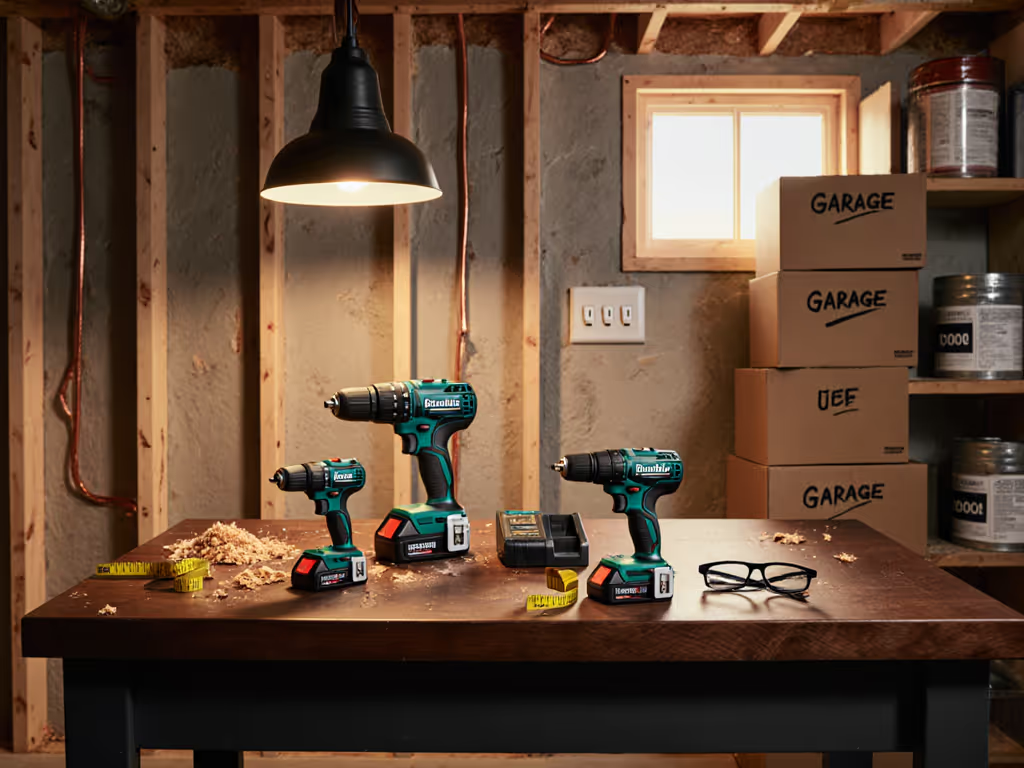
Here's a harsh reality: most DIYers accumulate 6-8 batteries and 3+ chargers over five years. This is waste.
A disciplined approach:
- Stick to one platform. Period. No "I'll just buy this one 12V compact for detail work." That's a gateway to chaos.
- Choose battery sizes strategically. Own two mid-sizes (2.5-3.0Ah for general work) and add a large (5.0Ah+) only when you move to heavy tools like reciprocating saws or grinders. Avoid buying every size the maker offers.
- Consolidate chargers. Keep one fast charger and one slow backup. That's it. Donate, sell, or recycle the rest.
- Track runtime per tool. After three jobs, you'll know which battery size suits which tool best. This prevents panic buying.
The Verdict: Platform Over Product
Treehouse construction drill selection feels like a product decision. It's actually a platform decision. The right choice means your second, third, and tenth tools cost less, your battery charger invests in breadth, and your shop stays uncluttered. The wrong choice means you're rebating last year's ecosystem and explaining to your partner why you own two cordless drills.
When evaluating a battery platform for elevated structure work, ask three questions:
- Does this platform offer 15+ tools across drill, impact, hammer, saws, nailers, and eventually outdoor equipment? If no, keep looking.
- What's the cost per Wh of mid-size batteries at street pricing, and how does it compare to the alternatives? Run the math. A 20% premium on tool cost but 30% savings on batteries compounds fast.
- Will the manufacturer still support this platform with new tools and batteries in five years? Check their release schedule and forums. Abandoned platforms become landfill.
Choose once, build smart. That discipline pays dividends the moment you add your second tool and realize your batteries work across the whole lineup. That's not a drill purchase. That's freedom.
Final Verdict
Your treehouse project is the perfect starting point for a long-term battery investment. Resist the urge to chase peak specs or grab the lowest price. Instead, commit to a platform with proven breadth, competitive cost-per-Wh on mid-range batteries, brushless efficiency, and strong ecosystem support. Pair your starter drill with two mid-capacity batteries and a quality charger. Plan to add an impact driver within a year, it is the natural second tool and the one that reveals platform value. By month 18, your next tool addition will cost half what it would've on a fragmented platform, and your shop will contain batteries and chargers, not graveyards of abandoned kits. That's the real win.
Related Articles