Drone Drilling Systems for Hard-to-Reach Locations
By Diego Castillo • 28th Nov
Let's clear the air immediately: when you search for drone drilling system or aerial construction tools, you'll find industrial inspection drones, not actual drilling rigs that can sink pilot holes in your ceiling joists or deck posts. As a community makerspace instructor who's taught hundreds of beginners, I've seen this confusion firsthand. People show up expecting drone-mounted drills to solve their inaccessible attic wiring or high-ceiling trim challenges, only to discover these systems cost more than their house and require an aviation license. Forget those industrial drone-mounted power tools, today we're focusing on realistic solutions for homeowners tackling hard-to-reach location drilling with standard gear. Here's how to adapt your existing tools for tricky spots without bankrupting yourself or needing FAA clearance.
Why Drone Drilling Systems Don't Belong in Your Garage (Yet)
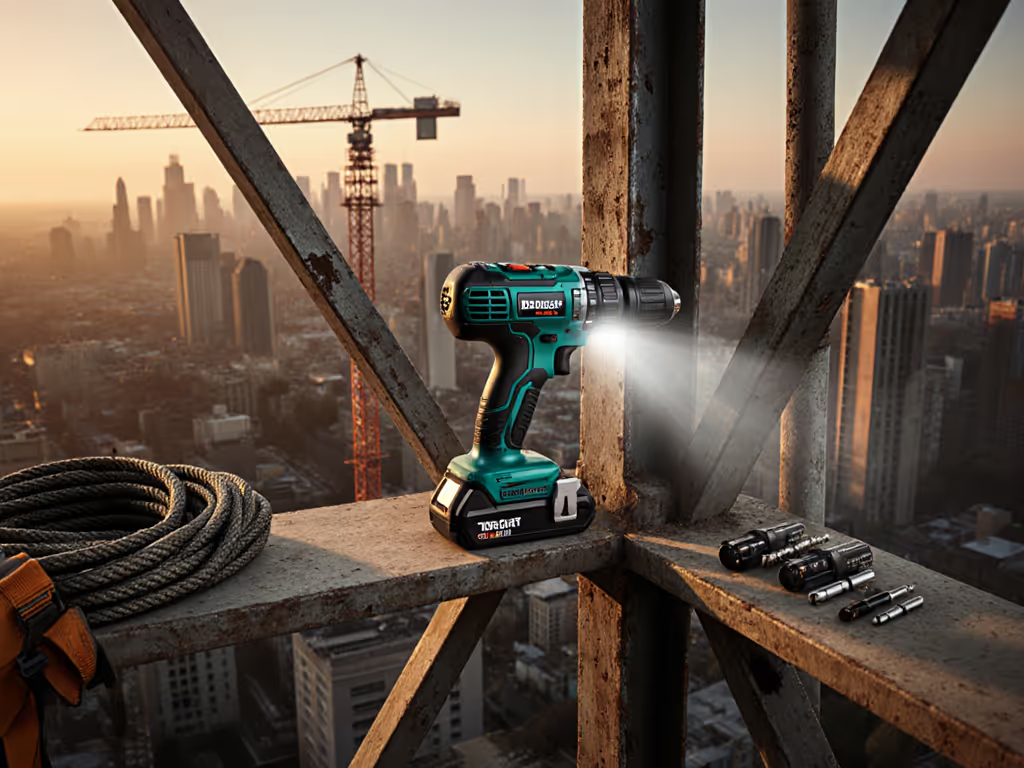
Before we dive into practical alternatives, let's address the elephant in the room. That drone drilling system you've been researching? It's designed for pipeline inspections in Arctic tundra, not drilling starter holes for your kitchen cabinet upgrade. Industrial drone-mounted power tools cited in search results require specialized pilot certification, weigh 20+ pounds, and cost $15,000 to $50,000. They're built for remote operation systems in oil fields, not your weekend project. Meanwhile, your actual pain point is probably "How do I drill into that ceiling beam without dropping my drill through the drywall?"
One smart buy beats three compromises
My Saturday class proves this weekly. Last month, a homeowner spent three weeks obsessing over drone solutions for attic wiring. When we pulled out a compact drill with a right-angle attachment, he finished the job in 90 minutes. Momentum matters; the right first steps stick.
5 Practical Solutions for Hard-to-Reach Location Drilling
Here's what actually works for DIYers, with tools you likely already own or can add for under $100. Each solution addresses your specific pain points around wrist fatigue, chuck slippage, and battery anxiety in tight spots.
1. The Compact Drill Kit + Right-Angle Attachment Combo
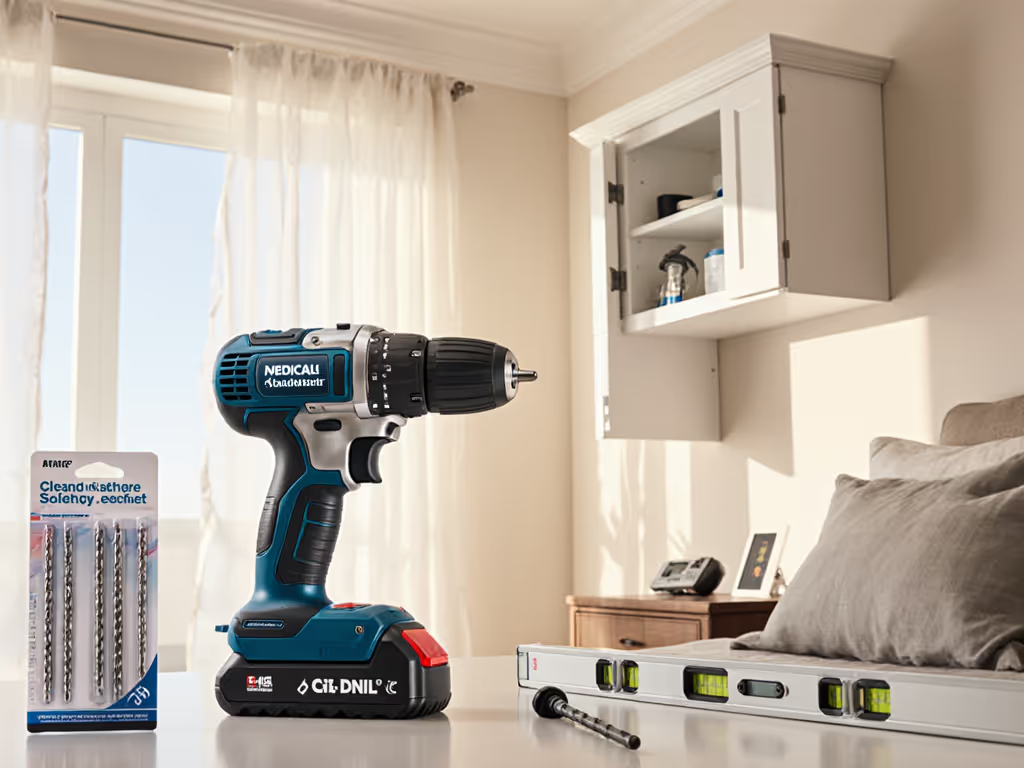
Why it solves your problem: That shoulder-straining reach into cabinet undersides? A 12V compact drill with a right-angle attachment (like Milwaukee's 48-89-5005) redirects torque 90 degrees, letting you work flush against surfaces. No more wrist cramps during overhead drilling. If you're unsure how torque and speed affect control in tight spaces, start with our torque vs RPM guide.
Key specs translated to your reality:
- Battery runtime: 2.0Ah packs drill 80+ 3" screws in SPF pine, enough for most cabinet installations
- Chuck accuracy: <0.004" runout ensures clean pilot holes even when braced against awkward angles
- Weight: 2.2 lbs total (tool + battery) vs 4+ lbs for standard drills
Your checklist before buying:
- ✓ Confirm compatibility with your existing batteries (most brands offer adapters)
- ✓ Test grip diameter, should fit comfortably in gloved hand
- ✓ Verify LED placement (must illuminate work surface at 90-degree angles)
Safety tip: Always use the clutch on lowest setting for delicate materials. I've seen too many beginners strip cabinet screws because they forgot to disengage hammer mode.
2. Flexible Shaft Drill Extensions
Why it solves your problem: Reaching behind toilets for plumbing anchors or inside wall cavities? Flexible shafts (like DeWalt DWMT75150) let you drill blind spots with precision. No more stabbing drywall with a rigid drill bit.
Real-world performance:
- Effective range: 18 to 24 inches (farther than any drone could maneuver indoors)
- Torque transmission: 95% efficiency up to 1,200 RPM (prevents bit walking)
- Cost: $35 vs $15,000+ for industrial drone applications
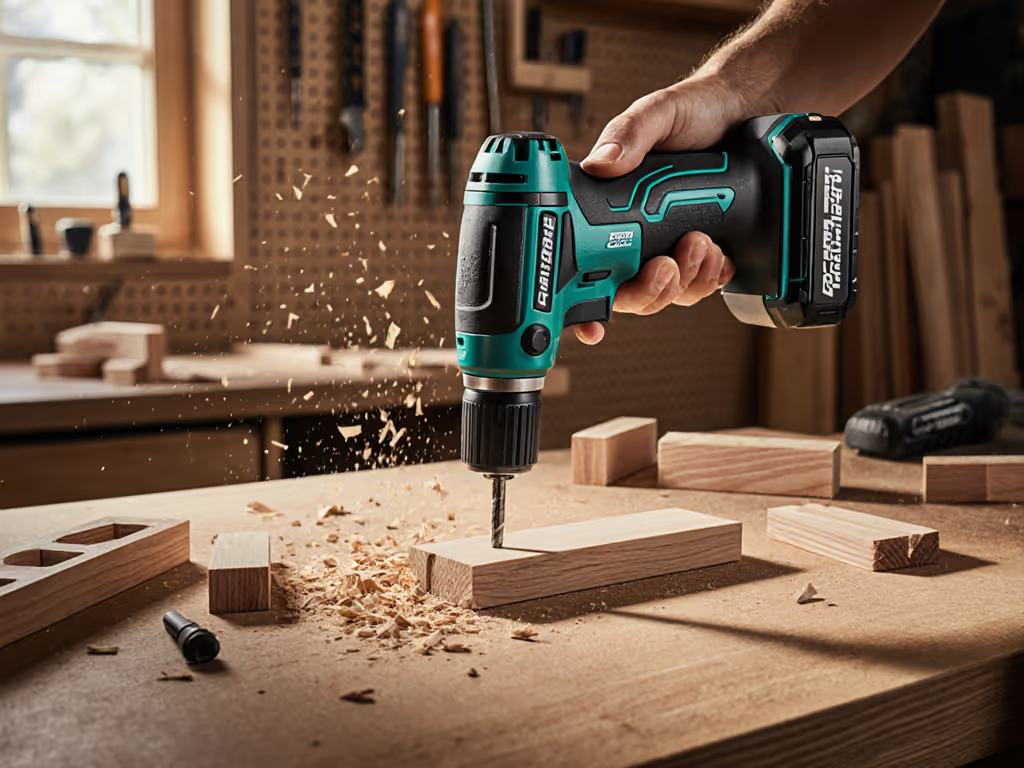
Critical bit selection: Use brad-point bits for wood (prevents skate on smooth surfaces) and carbide-tipped masonry bits for tile. Never use twist bits, they'll deflect off curved surfaces. For material-specific guidance, keep our drill bit cheat sheet handy.
Time estimate: Setup takes 2 minutes. Drilling 10 anchor holes in drywall: 8 minutes (vs 25+ with contorted body positions)
3. Magnetic Drill Presses for Metal & Concrete
Why it solves your problem: Installing handrails on steel beams or conduit boxes in concrete? Portable magnetic drills (like Bosch EMZ10) deliver drill press accuracy where you can't bring a stationary tool.
What the specs mean for you:
- Holding power: 2,200 lbs pull force (locks solid even on rusty beams)
- Depth control: Essential for consistent conduit box installations
- Coolant-free operation: No messy spills on finished floors
Pro tip: Always clean metal surfaces with a wire brush first. Rust reduces magnetic grip by 70%, leading to dangerous slippage. I've seen this cause more accidents than "drone drilling" ever could.
4. Cordless Impact Drivers with Depth Gauges
Why it solves your problem: Driving long screws into awkward overhead positions? Impact drivers with adjustable depth collars (like Makita XDT17) prevent blowouts when you can't see your work.
Task-specific advantages:
- No kickback: E-clutch stops rotation when torque peaks (critical for high-ladder work)
- Precision depth control: Set collar for exactly 1-1/4" penetration every time
- Vibration reduction: 60% less than standard drills (prevents numb fingers during marathon sessions)
Compatibility check: Confirm your bits have 1/4" hex shanks (standard for all major brands). Never use 3-prong shank bits, they'll slip under depth-controlled driving.
5. The "Drone Approach": Strategic Tool Positioning
Why it solves your problem: When nothing fits, sometimes you need to become the drone. My favorite low-tech solution: clamp your drill upside-down to a 1x4, then extend it into tight spaces with a rope. It's essentially a $10 remote operation system.
Step-by-step setup:
- Screw drill handle into a 1x4 block
- Attach bungee cord to drill's rear handle
- Feed bit through hole in block
- Lower assembly into space with rope
- Trigger drill with bungee pull
Safety must-dos:
- Always use a mechanical clutch setting (never hammer mode)
- Test run dry first to confirm bit alignment
- Wear safety glasses, flying debris is inevitable in confined spaces
This method saved a homeowner last week when installing soffit vents. He avoided $300 in rental ladder costs and finished before lunch.
Why This Approach Beats "Drone Drilling" for Home Projects
Industrial aerial construction tools solve problems you don't have. Your real battle is choosing tools that integrate with your ecosystem, not navigating FAA regulations. If you're choosing a system, our battery platform comparison breaks down ecosystem compatibility across major brands. Remember my core belief: Confidence compounds when your first kit matches your first jobs and timeline.
When you see ads for drone drilling system setups, ask:
- Does this solve my actual problem (drilling 20 holes in drywall) or an imagined one?
- Will this integrate with my existing batteries?
- Can I realistically learn this before my project deadline?
Your Actionable Onboarding Checklist
Before you buy anything, complete this 10-minute assessment:
-
Map your tightest workspace (measure depth/width with tape)
-
Identify your most frequent hard-to-reach task (ceiling? inside walls?)
-
Test your current drill with these constraints:
- Can it drill straight with elbow locked?
- Does clutch prevent blowouts at low speeds?
- How many holes per charge in similar materials?
-
Choose ONE solution that solves your #1 pain point (not all of them)
-
Start with two batteries, never three gimmicks
Last month, a hesitant beginner swapped to a compact drill with right-angle attachment and a mid-speed clutch setting. They sank their first straight pilot hole overhead without a ladder. We high-fived, and they left with a two-battery kit instead of drone fantasies. That's the win that sticks.
The Smart Path Forward
Forget expensive industrial drone applications that overcomplicate your projects. True innovation in hard-to-reach location drilling isn't about flying drills, it's about tools that adapt to human limitations. Your goal isn't to mimic industrial drone workflows, but to build a system where:
- Every battery charges in 30 minutes or less
- Chuck accuracy stays consistent across all attachments
- Weight distribution prevents wrist fatigue during marathon sessions
Your next step: Grab your drill tonight and test it in your hardest-to-reach spot. Does it wobble? Stall? Feel unbalanced? Tomorrow, visit a tool library (most makerspaces have them) to test the solutions above. Document which attachment solves your specific constraint, that's your true "drone drilling system."
One smart buy beats three compromises
Start simple, lock the ecosystem, and let skills compound. Your perfect hard-to-reach solution is likely already in your toolbox, waiting for the right attachment to unlock it.
Related Articles