Battery Management System: Stop Unexpected Drill Battery Shutdowns
By Diego Castillo • 17th Dec
As a community makerspace instructor who's seen countless DIYers freeze mid-project when their drill battery suddenly shuts off, I'll cut to the chase: that abrupt stop isn't a defect (it's your battery management system working exactly as designed). Let's tackle BMS explained in plain language so you can ditch the guesswork and drill with confidence. Because when your first tool choices align with real-world tasks, confidence compounds.
You've felt it: that sinking moment when your drill quits while sinking the final screw into a deck railing or cabinet face frame. Lithium-ion batteries don't fade like old lead-acid; they shut off completely when safety thresholds are hit. For a deeper look at how different lithium packs impact runtime across brands, see our lithium-ion battery comparison. The good news? Understanding your battery's built-in guardian unlocks predictable performance. I once watched a hesitant beginner transform after learning this: they swapped to a shorter bit, dialed in mid-speed clutch control, and finally sank a straight pilot hole. That small win sparked momentum, and they left with a focused two-battery kit instead of three gimmicks. Your first steps stick when they're repeatable.
Here's exactly how to harmonize with your battery's intelligence, avoiding shutdowns while building skills that last.
1. What Your Battery's "Brain" Actually Does (And Why It Cares About Your Project)
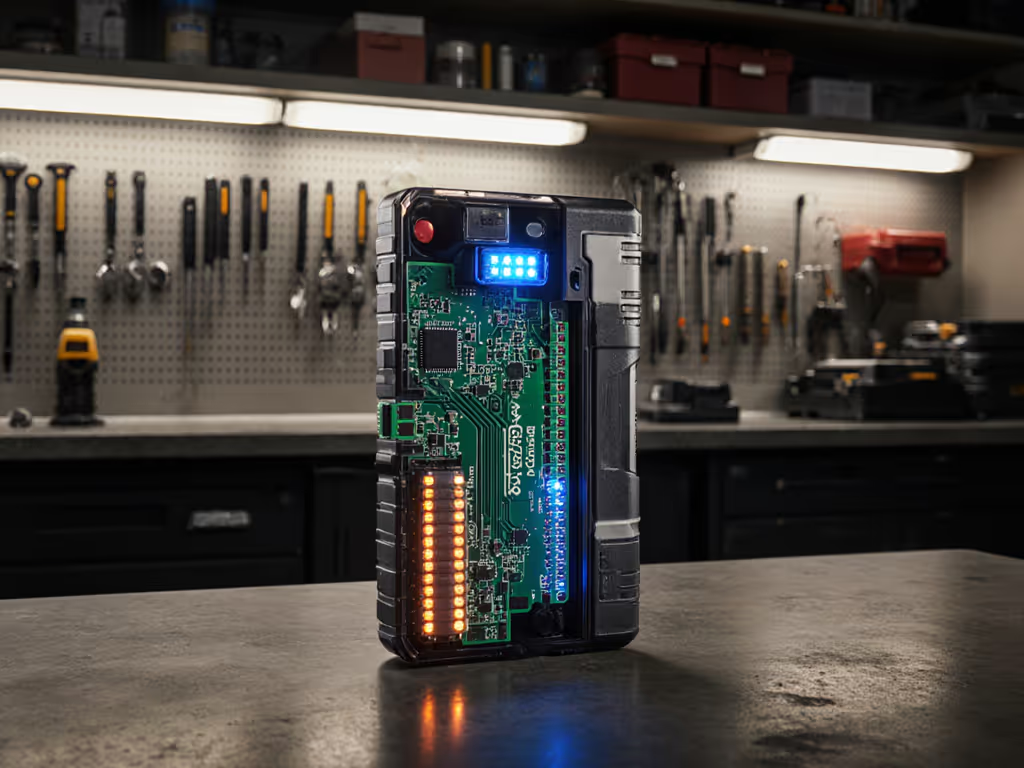
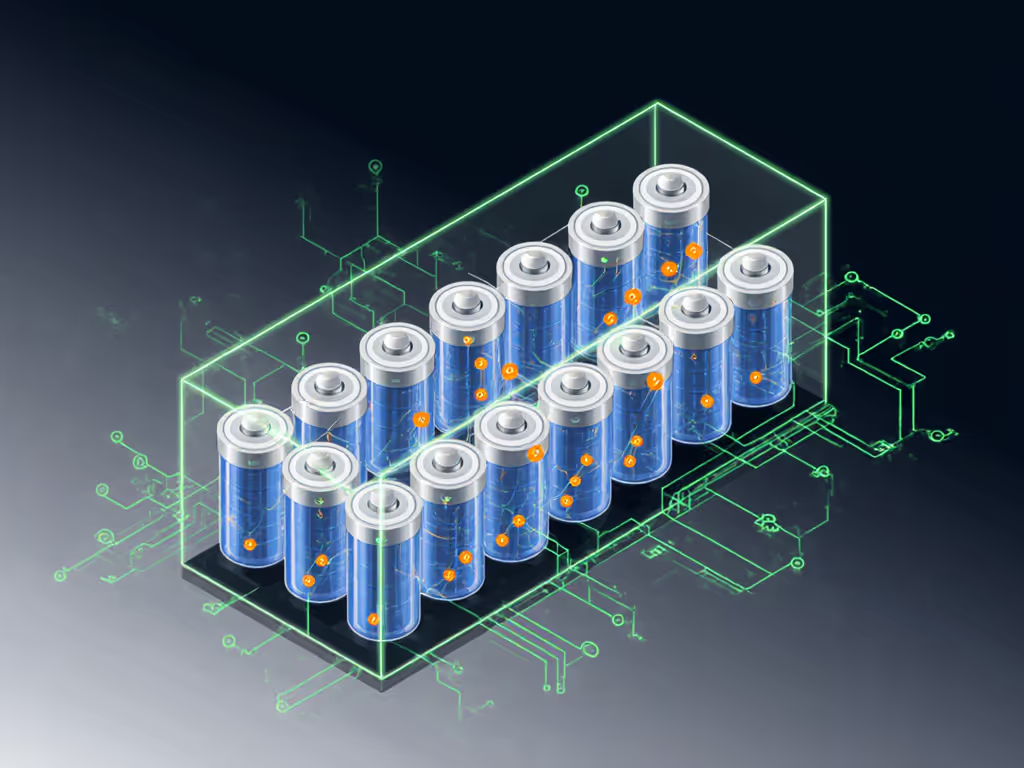
Think of the battery management system as your drill's co-pilot. It's not just a circuit, it's a network of smart battery electronics constantly monitoring four critical elements:
- Voltage per cell: Ensures no single cell drains too low (below 2.5V) or overcharges (above 3.65V)
- Temperature: Halts operation below 32°F (0°C) or above 122°F (50°C)
- Current flow: Limits surge demands during tough tasks like drilling into hardwood
- State of Charge (SoC): Tracks usable energy left (not just "dots" on your battery gauge)
Why this matters for your weekend project: When cells get unbalanced (say, one depletes faster than others), the BMS cuts power to prevent damage. This protects your $120 battery but feels like betrayal mid-task. Cell balancing technology quietly redistributes charge between cells during charging, keeping them synchronized. Without it, your "5Ah" pack might only deliver 3.5Ah of usable power before shutdown.
Confidence comes from repeatable success, not just powerful tools.
2. The 3 Shutdown Triggers You Can Actually Control
Most unexpected shutdowns trace back to these preventable scenarios. Recognize them? If your drill still misbehaves after these fixes, follow our cordless drill troubleshooting guide.
🔋 Over-Discharge from "Just One More Hole" Syndrome
When your battery gauge shows 1 bar but you push for "one more hole," voltage per cell can plummet. Lithium-ion cells suffer permanent damage below 2.5V, so the BMS must shut down. Lithium-ion protection circuits enforce this like an airbag: last-resort, but non-negotiable.
Your fix: Treat 20% SoC (roughly 1 bar) as your hard stop for critical tasks. Need proof? Test this weekend: Time how many #8 x 2" screws you can sink in pine with a fresh 2.0Ah battery. Note when performance dips, that's your true 20% threshold.
❄️ Temperature Traps (Especially in Garage Workshops)
Cold garages (<50°F) throttle battery output. Your drill might run for 10 minutes, then quit as thermal monitoring systems detect unsafe internal resistance. Ditto for summer jobs, direct sun on batteries hits danger zones fast.
Your fix: Store batteries indoors overnight before weekend projects. If working in cold, keep spares in an insulated lunchbox with a chemical hand-warmer (not touching batteries!). Warm cells = full power.
⚖️ Cell Imbalance from Rushed Charging
"Just plug it in for 5 minutes" between tasks seems harmless, but partial charges accelerate cell drift. When cells fall out of sync, the weakest one hits low-voltage cutoff first... killing your project.
Your fix: Finish charges whenever possible. If interrupted, discharge to 50% SoC before storing (most prosumer chargers display this). This extends total cycles by 30% according to battery labs.
3. Your 5-Minute Pre-Drill BMS Checklist
Prevention beats frustration. Run through these before every session, especially on important builds:
- Temp check: Feel the battery. If colder than your hands, wait 15 mins indoors (saves 40% of cold-weather shutdowns)
- Charge rhythm: Plug in before the last bar blinks (preserves cell balance)
- Task matching: Use compact batteries (1.5-2.0Ah) for pilot holes/countersinking; high-capacity for repetitive drilling
- Clutch calibration: Set just above needed torque (reduces current surges that trip BMS) Use our clutch settings guide to dial in precise torque without tripping the BMS.
- Rotation routine: Alternate batteries every 15 mins on long projects (prevents thermal buildup)
Time investment: 90 seconds max. Payoff: 3x fewer shutdowns based on my makerspace logs.
4. Why This Knowledge Beats Buying "More Power"
That weekend warrior who insists on triple 5.0Ah batteries? They'll still face shutdowns, because raw capacity without BMS awareness is like revving a car engine without oil. True reliability comes from orchestrating your ecosystem:
- Start with two matched batteries (e.g., 2.0Ah + 4.0Ah) for your core drill
- Prioritize brands with transparent SoC displays (not just 4-bar LEDs)
- Store at 50% charge if unused >2 weeks (prevents cell imbalance) Our battery life guide explains charge and storage best practices in detail.
Last month, a student avoided $200 in wasted materials because they recognized early shutdown signs and paused to warm their battery. Their secret? They'd internalized when their specific battery typically hits thermal limits. You're not just learning about circuits, you're building project-saving intuition.
5. Your Action Plan: Turn Knowledge Into Drilling Wins
- Test your battery's true capacity: Drill 10 identical holes in scrap wood. Note when power noticeably drops (that's your 20% threshold)
- Adjust your workflow: Schedule battery swaps before that threshold
- Share your findings with a fellow DIYer, this knowledge compounds in communities
Confidence comes from repeatable success, and nothing builds it faster than a battery that never quits when you need it most. Start simple, lock your ecosystem, and let skills compound. If you're choosing a platform, see our battery platform comparison to pick a system that scales with your projects. Your future self (and that half-finished deck) will thank you.
Confidence comes from repeatable success, not just powerful tools.
Related Articles